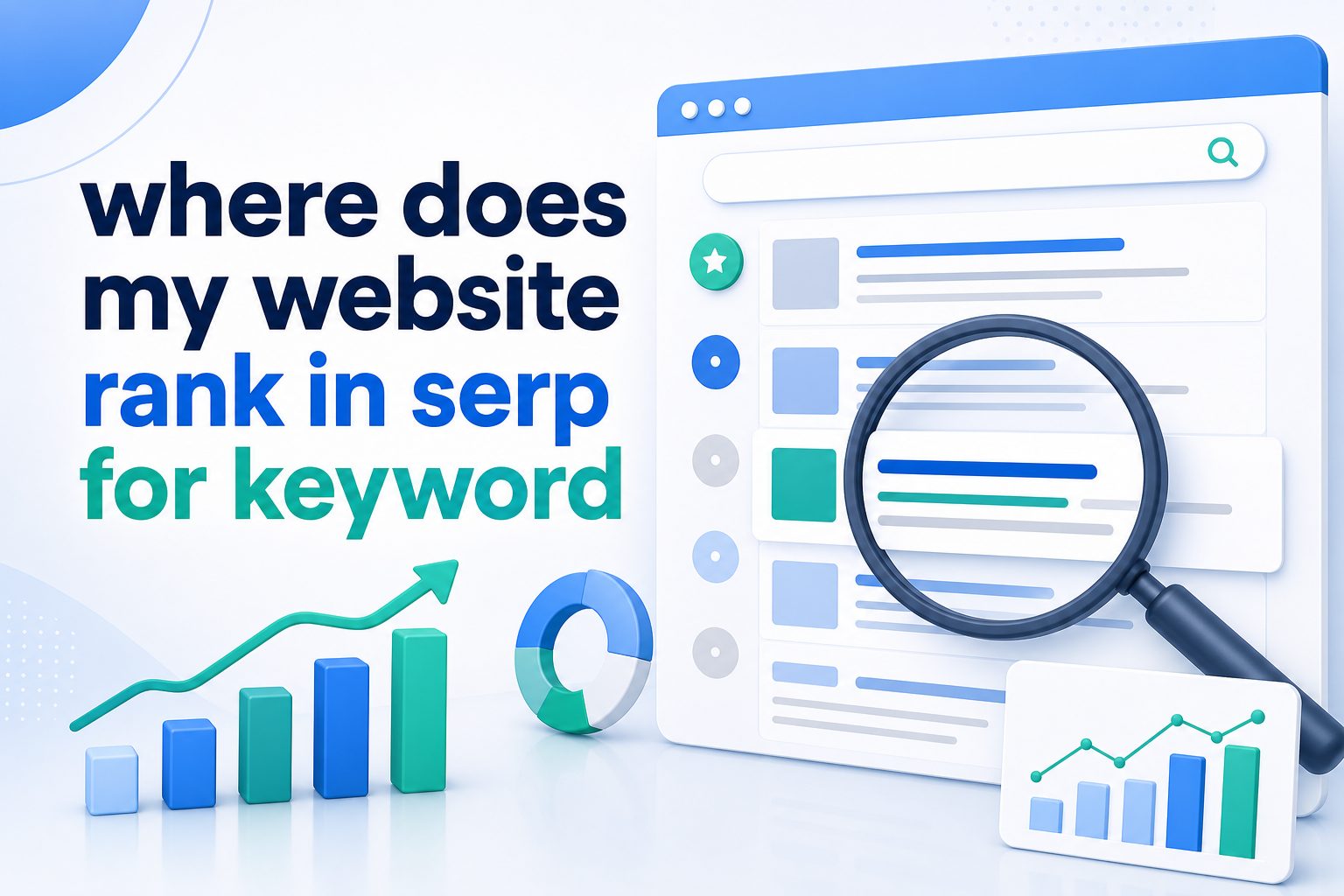
If you have ever asked, where does my website rank in serp for keyword, you are already thinking like a serious website owner. Ranking is not only about appearing somewhere on Google. It is about knowing whether your page shows up where real searchers can find it, click it, and trust it. A page ranking on position 3 can bring steady traffic, while the same page on position 43 may receive almost no visits.
Search engine results pages change often. Google adjusts results based on location, device, search history, search intent, competition, freshness, and content quality. That means your ranking can look different from one person to another. To understand your real position, you need reliable tracking methods, not random manual searches.
This guide explains how to check where does my website rank in serp for keyword, why rankings move, which tools help, and what you should do after finding your position. You will also learn how to read SERP data, compare competitors, improve weak pages, and build an SEO workflow that supports long-term visibility.
Where does my website rank in serp for keyword
To check where does my website rank in serp for keyword, use tools like Google Search Console, Ahrefs, Semrush, SERPWatcher, or a local rank tracker. Manual Google searches are unreliable because results change by location, device, and search history. Track your target keyword, page URL, impressions, clicks, and average position to understand true performance.
Where Does My Website Rank in SERP for Keyword and Why
When you ask where does my website rank in serp for keyword, you are really asking how visible your website is to potential visitors. A keyword ranking shows where your page appears in search results for a specific search phrase. If your page ranks near the top, users are more likely to click it. If it appears beyond the first page, most users may never see it.
Rankings matter because organic traffic often depends on visibility. A website can have excellent design, strong branding, and useful content, but if it does not rank for the right keywords, it may struggle to attract qualified visitors. Keyword ranking connects your content to real search demand. It shows whether your page matches what people want when they search.
However, ranking is not a fixed number. Your position can shift daily because search engines constantly evaluate relevance, authority, freshness, user experience, and competitor activity. One competitor may update a page, another may earn strong backlinks, and Google may test different results. These changes can move your page up or down without warning.
You should not judge performance from one search on your own browser. Personalized search results can mislead you. Google may use your location, search history, device type, and previous behavior to customize what you see. That is why a rank tracker or Google Search Console gives a more dependable picture.
The best way to understand where does my website rank in serp for keyword is to combine ranking data with traffic data. A keyword position alone does not tell the full story. You also need to know impressions, clicks, click-through rate, and whether visitors take action after landing on your page. Ranking is useful only when it supports business goals.
Once you know your keyword position, you can make smarter SEO decisions. If your page ranks on page two, you may improve headings, update content, add internal links, and strengthen topical depth. If your page ranks in the top five but gets few clicks, you may need a better title and meta description. Ranking data turns SEO from guessing into focused improvement.
How to Check Where Does My Website Rank in SERP for
Use Google Search Console First ,Google Search Console is one of the best free tools for finding keyword performance. It shows queries, impressions, clicks, click-through rate, and average position. If you want to know where does my website rank in serp for keyword, open the Performance report, filter by query, and review the ranking data for the target page.
Use a Dedicated SERP Rank Tracker
Rank trackers give cleaner daily or weekly keyword position reports. Tools such as Semrush, Ahrefs, SE Ranking, AccuRanker, and SERPWatcher can monitor keywords by location, device, and search engine. These tools help you see whether a ranking is improving, declining, or staying flat over time.
Check Rankings by Location and Device
A keyword may rank differently in New York, London, Toronto, or Berlin. Mobile results may also differ from desktop results. If your business serves a local audience, location-based rank tracking is essential. It helps you understand what your actual customers see.
Compare Your Page With Competitors
Do not only ask where does my website rank in serp for keyword. Ask who ranks above you and why. Look at their content depth, page structure, backlinks, freshness, media, internal links, and search intent match. Competitor analysis shows what your page must improve.
Track the Right URL
Sometimes the wrong page ranks for your target keyword. This is called keyword cannibalization or URL mismatch. If a blog post ranks instead of your service page, Google may be unsure which page is most relevant. Tracking the URL helps you fix that problem.
Why Does My Website Ranking Change in SERP?
Search rankings change because Google wants to show the most useful result for each query. If you wonder where does my website rank in serp for keyword and notice different answers every week, several factors may be involved.
Algorithm updates: Google regularly updates how it evaluates content quality, authority, helpfulness, spam signals, and user satisfaction.
Competitor improvements: A competitor may publish a stronger article, earn backlinks, improve page speed, or refresh outdated content.
Search intent shifts: If users begin expecting a guide instead of a product page, Google may change which type of result ranks.
Location changes: SERP positions can vary based on city, country, and local search signals.
Device differences: Mobile rankings can differ from desktop rankings due to mobile usability and page experience.
Content freshness: Some keywords reward recently updated content, especially in fast-changing industries.
1. Technical SEO issues can hurt ranking. Slow pages, indexing errors, broken links, duplicate tags, and poor mobile design can reduce visibility.
2. Weak content depth can limit ranking. If your article does not answer the full search intent, Google may prefer a more complete page.
3. Poor internal linking can hide important pages. Search engines use internal links to understand page importance and topic relationships.
4. Low authority can slow ranking growth. Backlinks, brand mentions, and topical trust help search engines evaluate credibility.
5. Low click-through rate may signal weak appeal. If your title and description do not attract clicks, you may lose traffic even with decent ranking.
When Should You Track Keyword Ranking?
You should track keyword rankings before, during, and after SEO work. If you only check rankings after publishing content, you miss the baseline. A baseline tells you where you started and whether your updates created progress.
Track rankings when you publish a new article, update an old page, launch a new product, enter a new market, or notice traffic changes. If you ask where does my website rank in serp for keyword after every major content update, you can connect SEO actions to ranking movement. This helps you avoid random edits and build a repeatable process.
Weekly tracking works for most websites. Daily tracking can help during launches, migrations, algorithm updates, or competitive campaigns. Monthly tracking may be enough for low-competition niches, but it can hide important changes. The right tracking frequency depends on your goals, budget, and competition level.
You should also track rankings before changing titles, meta descriptions, headings, URLs, or internal links. These elements can affect performance. If a page already ranks well, make careful improvements and monitor results. If a page performs poorly, use the ranking data to decide whether it needs more content, stronger links, better intent matching, or technical fixes.
How to Improve Where Does My Website Rank in SERP for
Match Search Intent FirstBefore optimizing a page, study what Google already ranks. If top results are tutorials, your sales page may struggle. If top results are product pages, a long informational article may not convert well. Search intent is the foundation of ranking.
Strengthen the SEO Title and Meta Description
Your title should include the target phrase naturally and make the benefit clear. Your meta description should invite clicks without sounding spammy. A strong snippet helps users understand why your result is worth visiting.
Improve Content Depth
To improve where does my website rank in serp for keyword, answer the main question fully. Cover related questions, include examples, explain tools, define terms, and make the page easy to scan. Helpful content usually wins over thin content.
Add Internal Links
Link from related pages to the page you want to rank. Use descriptive anchor text, but keep it natural. Internal links help users discover related content and help search engines understand topic importance.
Build Authority Over Time
Backlinks from relevant websites can improve trust. You can earn links through original research, expert guides, useful tools, digital PR, guest contributions, and high-quality resources. Authority is not instant, but it compounds.
What Tools Help Find Where Does My Website Rank in SERP for Keyword?
Google Search Console
Best for free performance data from Google. It shows average ranking, impressions, clicks, and queries.
Semrush
Useful for keyword tracking, competitor research, backlink analysis, and SERP feature monitoring.
Ahrefs
Strong for backlink research, keyword tracking, content gap analysis, and competitor comparison.
SE Ranking
Good for daily rank tracking, local SEO monitoring, reporting, and keyword grouping.
AccuRanker
Useful for precise rank tracking, agency reporting, and large keyword campaigns.
Manual SERP Checks
Manual checks can help with quick inspection, but they should not be your main method. Use incognito mode, disable personalization where possible, and remember that results can still vary.
SEO Summary for Where Does My Website Rank in SERP for
If your main question is where does my website rank in serp for keyword, the answer depends on accurate data, not guesswork. Your keyword position can change by location, device, search intent, competition, and Google updates. That is why you should use tools such as Google Search Console, Semrush, Ahrefs, SE Ranking, or AccuRanker instead of relying only on a manual search.
A good ranking report should show the keyword, ranking URL, position, impressions, clicks, click-through rate, device, location, and trend over time. This data helps you understand whether your SEO is improving or losing ground. It also shows whether the right page ranks for the right query.
To improve rankings, start with search intent. Look at the pages already ranking and identify what users expect. Then improve your title, meta description, headings, content depth, internal links, page speed, and authority signals. If your page ranks on page two, small improvements may push it to page one. If it ranks nowhere, you may need deeper content, better targeting, and stronger links.
The phrase where does my website rank in serp for keyword represents a practical SEO question. It is not just about position. It is about visibility, traffic, trust, and conversion potential. When you monitor rankings consistently, you can make smarter decisions and avoid wasting effort on keywords that do not support your goals.
Conclusion
Knowing your keyword position helps you understand how visible your website is in search results. Instead of repeatedly asking where does my website rank in serp for keyword, build a tracking system that gives you reliable answers. Use Google Search Console for real performance data, use a rank tracker for position monitoring, and study competitors to understand what Google rewards.
Your SERP position is not the final goal. It is a signal. The real goal is qualified traffic, useful content, better engagement, and stronger conversions. When you track your website’s keyword ranking in search results and improve pages with clear intent, your SEO becomes more predictable and effective.
FAQs
What does SERP ranking mean?
SERP ranking means the position your webpage holds in search engine results for a specific keyword. If your page appears third on Google, your ranking is position 3 for that query.
How do I check where does my website rank in serp for keyword?
Use Google Search Console or a rank tracking tool. Enter your target keyword, choose the location and device, and review your page’s average position or live SERP ranking.
Why does my keyword ranking keep changing?
Rankings change because of algorithm updates, competitor activity, location differences, user behavior, content freshness, and technical SEO issues.
Can I check rankings manually on Google?
You can, but manual checks are not fully reliable. Google personalizes results based on history, location, and device. Use rank tracking tools for cleaner data.
How often should I track keyword rankings?
Weekly tracking is enough for most websites. Daily tracking is useful during launches, migrations, algorithm updates, or competitive SEO campaigns.
How can I improve my SERP ranking?
Match search intent, improve content quality, optimize titles and meta descriptions, add internal links, fix technical issues, and earn relevant backlinks.